The 2am Club: Own Your Night.

Waking up early has traditionally been put equal to being good, efficient, even heroic. Early risers have been praised in literature such as The 5am Club. One of the recommendations in that book is to go to bed at 10pm. Great, that’s the time when I am most creative. How about normalizing diversity in people’s biorhythms? For some, waking up at 5am is not even a challenge – they are programmed that way by nature. Then there are night owls like me. If I’d follow my body rhythm I’d probably wake up at noon and go to bed at 4am. I am an involuntary 5am club member though, as in my daily job my day often starts at 5am due to the time difference between California and our headquarters in Stockholm. My colleagues know: at 5am I may look awake but my brain is at 30% capacity. Moreover, when it gets exposed to the 5am torture it never reaches 100% that day. I found a life-hack to go for a nap when I’m done with the bulk of my morning meetings so that I look and feel like a human when I reach the office in the afternoon. My brain gets fooled by that restart and starts being creative again.

Photo by Chris Montgomery

In his epic TED Talk “Choice, Happiness and Spaghetti Sauce”, Malcom Gladwell said: “By embracing the diversity of human beings you will find your way to true happiness”. Our society has done a good job embracing gender, cultural, and age diversity, and even the diversity when it comes to our taste preferences (and monetized on that). Biorhythmic diversity has not received much attention though. Working nine to five has been a standard for many office workers in the past. Covid-19 forced many companies into mandatory remote work in the past that has now transformed into hybrid ways of working, where people get to spend part of the working week working remotely, and the rest from the office. Remote work opens opportunities to work across time zones, and time your days to optimize your biorhythmic efficiency.

Photo by Mikael Kristenson

Our society is made for early risers. Schools start early, and I feel the everyday suffering of my kids who inherited my night owl genes. My daughter’s morning ritual in order to wake up is pouring cold water on her face, among other things like multiple alarm clocks and shaking her heavily. Even that does not always help. At the same time, she rarely falls asleep before 2am.

Let’s give recognition to the night owls, who code, write, create, innovate, design and do their best job at their most efficient hours. Let’s not shame people who turn up at the office by 10am or later – they are probably doing what’s best for the employer they are working for – working when they are most efficient.

Photo by Jefferson Santos

The Lagom of AI Hype

“Lagom” is a Swedish term that doesn’t have a direct translation in English but roughly means “just the right amount” or “just enough.” It embodies the idea of moderation and balance in various aspects of life. It suggests not too much, not too little, but rather an optimal or suitable amount. 

Photo by Jen P.

Let’s talk about the current AI hype that is not directly lagom. Today, generative AI has sparked hype due to its impressive ability to create content like text, images, and music. People are fascinated by its creativity, potential applications across industries, and the possibility of disrupting traditional creative fields. Media coverage amplifies excitement, and while in recent years many people started identifying as AI experts, nowadays we mostly hear about generative AI.

Photo by Edwin Andrade

This hype is not new to AI. The history of AI is characterized by alternating waves of hype and skepticism, commonly known as “AI summers” and “AI winters”. Each wave begins with excitement and high expectations for AI’s potential to revolutionize various fields, driven by breakthroughs in technology and promising research findings. However, these periods of optimism are often followed by disappointment in the potential of new technology when progress fails to meet initial promises, leading to lowered interest known as an AI winter. Despite these AI winters, each cycle has contributed to the advancement of the field, as lessons learned during periods of skepticism have led to new approaches, innovations, and renewed enthusiasm in subsequent waves of AI development.

Any hype has pros and cons. On the positive side, hype can generate a lot of awareness and interest, driving investment and innovation in a particular area. It can catalyze research and development efforts, leading to breakthroughs and advancements that may not have been possible otherwise. Additionally, hype triggers excitement, mobilizing communities to explore new possibilities. However, hype can also create unrealistic expectations, leading to disappointment if the promised benefits fail to materialize. 

The introduction of AI in the telecom industry has been gaining speed in recent years. While early experiments and trials show great benefits in improved performance and resilience of the networks, all the way from rollout and operations to deeply embedded features in the heart of the radio access network, the speed of adoption is dependent on observability of systems, underlying AI infrastructures such as data lakes, and MLOps layer making sure the algorithms get refreshed as soon as they start drifting compared to reality. In other words, in the perfect world, where we can observe all the internal workings of the wireless communication system, one can see great benefits of AI, but the path of reaching full observability is not straightforward.

Photo by Mudit Agarwal

Implementing new technology too quickly can lead to various mistakes that can undermine the success of the initiative. Rushing into implementation without conducting thorough research and analysis can result in choosing a solution that doesn’t align with the organization’s needs or goals. In the worst case, organizations will face the need of making a U-turn, redesigning the whole system from scratch and losing substantial investments. Inadequate training and support for employees can lead to resistance and low adoption rates, hindering the technology’s effectiveness. Neglecting to consider scalability and integration with existing systems can lead to technical issues. Overlooking data security and privacy concerns can expose the organization to significant risks, including data breaches and regulatory violations.

Using AI hype in a smart way involves leveraging the excitement and attention surrounding AI to drive positive outcomes for the telecom industry. It’s important to focus on concrete practical applications of AI that address real business challenges and deliver value. Identifying specific use cases where AI can improve efficiency and resilience of the networks, enhance customer experiences, or drive innovation, is critical for telecom providers to ensure that AI ideas lead to action. In addition, it’s essential to invest in talent and infrastructure to support AI implementation. Building a team with expertise in AI technologies, can ensure that the organization has the capabilities to develop and deploy AI solutions successfully and sustainably. In the times of hype, let’s remember the words of the King: “A little less conversation, a little more action”.

Photo by JR Harris

·  

Two Years in Silicon Valley


– How will you celebrate Thanksgiving?
– We’re aliens and still learning how to celebrate in a proper way.
– Which planet are you from?
– We are from planet ABBA.

It has been two years since we moved to Silicon Valley from Stockholm. After the first year we were still in a slight shock (from the speed the things are moving with), and now, after two years we definitely landed, created opinions and found great new friends. We’re grateful for that. And with that, as you can see, we’ve joined the Thanksgiving tradition. Let’s move on. December was a month for reflection, and January is the month for writing so here we go. Here are our reflections and aha-moments from our two years in the Valley:

Diversity and Integration 👍

We had no clue of the amount of diversity in Silicon Valley. Moving to Silicon Valley is not as generic as “moving to the US”. There is a great mix of nationalities, and people speak openly about ethnicity, race(!) and background, and cherish the unique traditions. Our kids friends are from India, China, Africa, Europe, US, you name it. There are no cultural bubbles – they all hang together and learn from each others’ traditions. When our little Pablo started school here, he was 6 years old and did not speak a word of English. The school offered him an extra teacher who spoke his mother tongue and sat next to him during classes for the first six months. Pablo became fluent in English within his first year in US. When our 14 yo Elin first came to Palo Alto high school campus to start as a freshman, she got picked up by the janitor in a golf car with the words “Welcome to our Family!”. When our 13 yo Alexander started JLS Middle School, one of his first classes was Leadership and he was part pf the school’s TV production team. Silicon Valley knows how to integrate expats and kids of expats in record time.

Infrastructure 😐

This is something that you would not expect from a high-tech place like Silicon Valley, right? What we see in practice is that the roads are broken, electrical and internet cables are hanging above the road, and in many places there is no mobile internet coverage. Not surprisingly, autonomous car vendors are not relying on the road infrastructure when they build their features (we’ll come to that). In addition, we had to learn how to write checks…

House Prices 😳

At the time of writing the 4-bedroom house we’re renting has the market value of 5M USD. It has a minimal backyard, and is placed between our neighbour’s houses. People try to get as much as possible from the land in Palo Alto, and the lots are very small. Obviously, Silicon Valley salaries are still very competitive and people can afford buying properties. Many of those who bought their houses in the area say that they would not be able to afford them today, and only the yearly tax would amount to what they once paid as a downpayment on the house.

The Weather 🙃

Welcome to sunny California they said… We gave away all our warm clothes and decided to wear open-toe shoes all year around (when not wearing ski boots ofc). Little did we know… During these two years we got to experience heat waves (45+ celsius), earthquakes, flush floods, mud slides, rock slides, and snow storms, with mandatory electricity outages related to them.

Work Hard Play Hard 💪

From the start we’ve decided to be yes-men, and explore all the social opportunities the Valley brings. The social calendar got fully booked pretty quickly. Work-related mingles, presentations from tech giants, academic gatherings, and school-related activities filled every evening. 95% of them would normally be accompanied by mandatory wine and cheese, and, honestly, some of us could not eat so much cheese… so after a while we decided to be more picky. Especially because our days often start at 5AM in meetings with Sweden, and in combinations with late evenings that life style would not be sustainable. In addition, one quickly notices that every meeting in the Valley is about work. People would be pitching you their business idea, discuss potential innovations or fundraising.

Innovation 🤖

The fact that the level of innovation in the Valley is high is not a surprise for anyone. Here you can see the latest inventions in use. San Francisco is filled with autonomous cabs, Cybertrucks are on the streets, people use AR glasses in daily life, drones are making deliveries, and human-flying drone companies are testing their prototypes. Probably, one of the most important factors in all this is that the Valley is filled by early adopters, and the level of acceptance of the new technology in the society is very high.

Written by Elena Fersman and Paul Pettersson

AI in Telecoms: Past, Present and Future

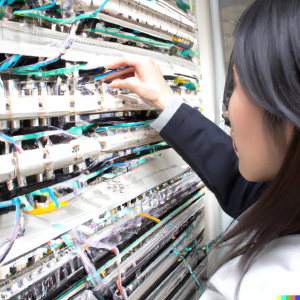
Manual switching board.
Picture source: DAL-E 2

AI Journey at Ericsson started over 15 years ago when a group of enthusiasts at Ericsson Research started to look into big data analytics methods in attempt to simplify the lives of our colleagues who worked in operations and sat on numerous trouble ticket and alarm data around the world. At the same time, lots of knowledge and information about the telecom domain was quite structured in manually-readable text such as product documentation. Nowadays we know that text written in a digital form can easily be transferred to a machine-readable format, so we made use of all this beautiful documentation and created the first version of our telecom knowledge-base that was successfully used in trouble ticket resolutions. Interestingly, back then, the sizing of our first and second line support teams were several thousands of people because Ericsson’s Managed Services that even today serve over one billion of subscribers used to be a highly labour-intensive business. Things have changed since then. Many manual tasks have been automated, and even privacy aspects became improved when switching from manual handling of operations belonging to different customers, where knowledge sharing across the competition boarders was not allowed. 

Consumers with no Internet.
Picture source: Dal-E 2.

After solving the most obvious parts urgently requiring automation, and what i used to call “low-hanging fruits”, we switched to optimisations that were closer to the heart of telecom system, namely radio access network and core. The specifics of usage of AI in these parts of telecom system include real-time aspects. Here we’re talking milliseconds. In order to be able to proactively adress any unwanted situation in the network (such as service degradation, which can lead to fatalities if safety-critical enterprises are relying on it), one needs to receive the timely input, meaning that the data sampling needs to be of a high frequency, and to be able to process this input in “real-time”. In this context by “real-time” we actually mean “as fast as possible” unlikely the formal definition from real-time systems research when the result is supposed to be delivered “just in time”. 

Knowledge sharing: Stockholm Library.
Picture source: Paul Petersson Fersman.

The world of telecoms has seen some fundamental changes thanks to AI. The most important paradigm shifts include the following aspects:

  • Firstly, thanks to knowledge sharing techniques, we can see more reuse within telecom industry, and across adjacent industries. This change has been made possible by global knowledge sharing techniques including ontologies, semantic interoperability and large language models.
  • Secondly, AI is gradually replacing dangerous tasks of our field support operators, such as tower climbing in order to perform an inspection. Telecom sites are nowadays capable of preventively notifying decision makers about any failures or predicted service degradations. This can be done through analysing the data coming from the base stations or external evaluations via drones in combination with computer vision. In many cases, this predicted service degradation can be resolved remotely, without exposing humans to dangerous tower climbs.
  • Thirdly, AI has proven to be successful in control loops, including the fastest, close to real-time control loops. These control loops assume execution of an AI algorithm on a dedicated hardware, as close as possible to where the decision is taking place. These fast control loops are found in the heart of radio access network.
  • In addition, the latest developments obviously include various applications of large language models, where we see clear benefits from using these models in customer support, R&D efficiency and even innovation.
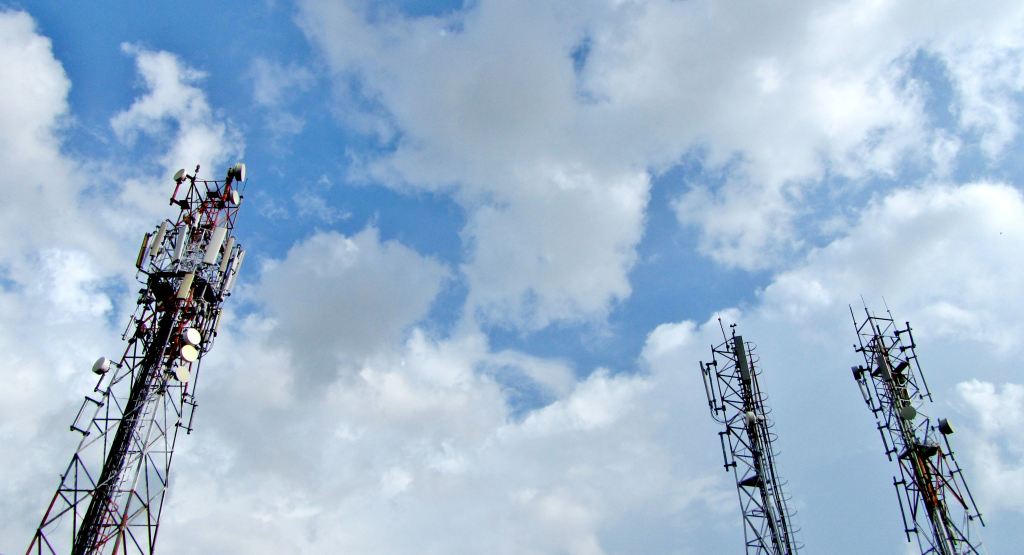
Mothers of Mobile Internet.
Picture source: Photo by Mudit Agarwal on Unsplash.

All these AI developments have been very impressive so far. Let’s discuss what’s missing to be fully capable of tapping into the potential of AI in our society.

  • First of all, the AI market is fragmented. Even in the scope of one company (even though we’re talking of a pretty big one), after a new technology has been detected, you can find over 20 places where it has been developed and applied. This is simply a human nature, and is much closer to behavioural science than computer science. However, all these numerous deployments will still facilitate the overall progress, and eventually we will converge on one (or a couple of) winning solutions, just like the hyperscalers of the world today.
  • Secondly, this technology is not being developed according to standards (which we, telecom people, normally love so much because in telecoms standards mean scale). In AI, however, the pace of development is much higher than in telecom industry, and forcing any AI developer to comply to standards will simply hinder innovation. 
  • Another gap – and after this you’re free to call me Captain Obvious – is Observability. We’ve been living with this gap way too long and, to be honest, it caused me some gray hair. Here we’re facing a digital divide, but not talking about consumers but rather industries. See, a “youngster company” on the market would be a digital native, and would hopefully architect all its processes and products accordingly from scratch. This means that it would probably be able to read out any data from the products and services in the field where matters to be able to improve. When you instead look at a 100+ years old company, then the processes, mindset and the culture will need to be redesigned according to the digital native principles, putting AI in the middle and not “on top”. 5G was the system partially observable to take advantage of AI techniques. 6G-baby is being created as an AI-native baby.
  • Further, AI trustworthiness needs to be taken seriously, and algorithms ensuring adherence to non-bias, non-discrimination and explainability principles need to be in place. 
  • Lastly, let’s not shy away from the fact that AI is a software, and without a proper actuation its precise outputs are useless. Precise actuation is just as important for the whole system as precise observability.

    Take-aways:
  1. AI is not an icing on top of the cake. It has to be embedded in a product or a service to offer the full advantage of its capabilities to either take proactive measures or be able to react and compensate the network’s imperfections in rea-time.
  1. AI in telecoms needs to be able to observe what matters. We have tons of data, and most of it is not interesting. It’s when something is about to happen, we need to be able to observe it with high frequency.
  1. We need to give AI time to prove itself. In industries that have existed for over 100 years, there are some fine-tuned algorithms that are difficult to challenge. Even though the challenge is important and necessary. Still, replacing a conventional rule-based system with an AI-bases algorithm may lead to performance degradation at first. It’s like bringing a talented trainee to a workplace full of experts that have been there for a while. There is a slim change for that trainee to make an impact unless we give her time to prove herself, since AI algorithms are adaptive by nature. 
  1. AI-to-AI communication is important. Every industrial domain has its own enterprise data, and its own AI crunching this data. When we connect or stack different domains, such as, for example, intelligent transport systems domain relying on connectivity domain relying on compute infrastructure domain, we will face different AI algorithms operating within these three domains. Each of them will have its own strategy, so we better ensure collaboration between them. 
  1. Trustworthiness of AI. Trustworthiness of AI is something that needs to be there from the start so that we ensure that the algoritms, even following their best intentions, won’t lead us into unwanted situations. 

Beartown by Fredrik Backman

Fredrick Backman knows how to get readers attention and make it hard to stop reading. That did not happen to me from the start of the book since I have not been exposed to team sports in the way the book describes, and it was hard to get motivated to read about all the small nuances of a hockey team that the first half of the book was about. The author was setting the scene in the first half of the book, getting us acquainted with the characters to execute the main part of the plot with the full strength in the second part of the book. It’s gripping and telling a hard and realistic story that would speak close to a heart of any parent.

Elena’s rating: 4 out of 5

2022 to 2023

“When the going gets tough the tough gets going”.

An abstract paining of a busy blond woman generated by DALL-E.

It’s time to reflect and make new plans. “How was your 2022?”, Paul said. “Probably the worst year of my life”, I replied. He looked shocked. “Oh, I meant on a macro-perspective. On a micro-perspective, it’s been a good year”. I already talked about the macro-perspective in my previous blog post. On a micro-perspective, it’s been an exciting first year in California for me and my family. It’s been the year of taking tons of vaccinations because we did not have our records from Sweden, buying furniture for the new house in the times of global shortages, choosing courses in the new school system, getting a car after eight years of being proudly car-free, and getting a drivers license for the fourth time in my life. It’s been the year of understanding and getting used to the new – the new school system, the new workplace, the new neighbours and the new traditions. It’s been a year of exploration, and exploration is exciting. We’re locals now; we’re from Palo Alto, California, when we get the question: “Where are you guys from?”. In 2022 we met many new friends who will be our friends for life, I’m sure. And we have strengthened our bond with the friends that we left in Sweden – luckily we meet quite often. I accidentally became a snowboarder. Elin join the swim team and water polo team, Alexander decided not to go for American football (what a relief) and went for soccer instead. Paul Jr is fluent in English and started to correct mine. We spent plenty of time with our amazing friends but that’s never going to be enough.

Work-wise 2022 has been an exciting year. After a long time working from home, we finally returned to the office. I never though that I would be missing going to the office but that’s a fact. 2022 was a year of many changes in my organisation, and 2023 will be the one where we can run faster. I have co-authored a book, together with Paul and Thanos – looking forward to its release in 2023! 2022 was my first full year as a fellow of the Royal Academy of Engineering Sciences in Sweden.

My resolutions for 2023:

  • Less shopping!
  • More time with my mom!
  • More time with my friends!
  • Write!
  • Speak-up!

Books I read since last time…

Reading has different purposes, just like any other consumption, like eating or looking at screens. At times, I need a book to relax and think about something else than my day-to-day life. Those books are easy to consume, and normally the don’t give you a lot of long-lasting impressions. Some books give you a lot of new knowledge, and other books give you a lot of new thoughts, and some are just for comfort. This was a disclaimer for my somewhat mixed reading style.

Kazuo Ishiguro: Klara and the Sun. This was the best thing I have read in a long time. Just read it and tell me how you felt about it. Ishiguro did not receive his Nobel prize for nothing – he is a genius author with a very innovative touch. It’s a sci-fi book, which is not at all far from being seen just as fiction because the characters described in the book can in fact be our reality in a short time. The book made me surprised a couple of times when the story let you realise how it would develop. It does provide a number of ethical questions without giving answers to them. A must-read!
Klara and the Sun: 5 out of 5.

Camilla Läckberg and Henrik Frexeus: The Box and Cult. The Box was great – scenes where you cannot breathe started to catch me directly after the first pages (listening minutes). This was a great entertainment, and as a bonus I loved the interview of Camilla and Henrik at the end of the book where they describe the way two different authors collaborate to achieve a smooth experience for the reader with only one writing style. The book is a complex criminal story where the authors plant clues and false clues for the reader to start guessing who the bad guy is, keeping it exciting until the end of the book. I couldn’t wait to read the second book in the trilogy – Cult – and when it finally came out i got disappointed. Kult was not at all as exciting as the Box, and even as i write this review i can memorise a lot of scenes from the Box but nothing from Kult.
The Box: 4 out of 5.
Kult: 2 out of 5.

Elon Musk: Tesla, SpaceX, and the Quest for a Fantastic Future. I love reading biographies of interesting people and Elon is surely a fantastic innovator, disruptor, a person with a can-do attitude when everyone else is saying that something is not possible. He is a challenger or many traditional concepts, including the concept of family. The book is not a biography but rather described the path of building the companies, with ups and downs, with almost not references to Elon’s private life which is certainly hoped for. Still, exciting to learn about the smart steps and the mistakes on the way, especially after our move to Silicon Valley and buying a Tesla after eight years of being car-free.
Tesla, SpaceX, and the Quest for a Fantastic Future: 4 out of 5.

Sophie Danell and Pia Sander: Priset Jag Fick Betala. A very well described drama story of a woman cheating on her husband with all its consequences. A read for women only, and can be categorised by a Swedish term “tantsnusk”. The book is written in a very personal way which makes me wonder if it’s based on a true story. An at-the-moment entertainment that does not persist.
Priset Jag Fick Betala: 2 out of 5.

Delia Owens: Where the Crawdads Sing. I liked this book even though at times I did not have patience to read the low-paced story that was supposed to get the reader in the right mood, almost in a meditative fashion. The book is describing the challenging life of the main character, Kya, and towards its second part grows into a murder mystery. The book provides the reader with a certain feeling of presence in the main character’s life that remains with you long time after reading it.
Where the Crawdads Sing: 3.5 out of 5.

Björn Natthiko Lindeblad, Caroline Bankler, Navid Modiri: Jag Kan Ha Fel. A life story of Björn Natthiko Lindeblad of his life as a buddhist munk, with its internals and specifics. Fascinating story but not something that inspires me. The question of discipline, however, is interesting as we face it every day. On the other hand, it must be easier to be disciplined under strict conditions and rules. Another interesting aspect of the book is that munks living under such strict conditions are happy people, which is something to remember.
Jag Kan Ha Fel: 3.5 of 5.

Ernst Hemingway: A Movable Feast: Restored Edition. I re-read this one. In my opinion, it’s the best book ever written. It’s a pure joy and something that gives you energy, motivates you and remains with you. This book became a moveable feast for me.
A Movable Feast: 5 out of 5.

I did try to read a couple of more books that I did not like, or they did not like me and did not stick. I won’t rate those.

Perspectives

My father passed away in the beginning of this year. It’s something you can never get prepared for. My mother lives alone in Saint Petersburg after being married to my father for 56 years. Extra tough for me after my recent move to California. What I felt that day and the amount of tears was incomparable to what I felt on the 24th of February, when Russia, the country where I was born and lived half of my life, invaded Ukraine. That day I had no words, only tears. This is so much bigger than a personal tragedy of losing a family member. This unexplainable act concerns all of us. Beautiful historic cities in Ukraine are being bombed, people are being killed, and they are hiding and fleeing in fear. And Russians did not ask for this, they are horrified. There are demonstrations on the streets across the whole country and people are raising their voices against the war, under the risk of ending up in prison. The day it started I had no words, only tears. But having no words is not an option. We all have words and we need to make ourselves heard. My 13-year old son who appears to be the only Russian in his school did an interview and spoke his mind for peace. My dear friend Ivetta is organising a concert in Stockholm for peace in Ukraine, with hundreds of people attending. I love Ukraine and Ukrainians, respect and cherish their traditions, and I am in tears every time I watch the news nowadays. Russians and Ukrainians have always been brothers; how do you turn brothers against each other?

My family always had a tradition – every new years eve, while the clock hits 12 times and crosses the midnight, we would write a wish on a small piece of paper for what we hope for the coming year. When I was little and had hard times putting down my wishes my parents always said – write “PEACE”, the word is short (“МИР” in Russian), easy to write and is the most important thing in life. Both my parents were born in 1941 – my mom under evacuation in Samara, and my father in Leningrad, where he got to experience the siege. True stories from that war told by my grandparents have always been with me, like a distant nightmare. No one could think that the evil social exercise will be repeated. I kept writing PEACE on my small piece of paper, every new years eve. This time, the paper will have to be a lot bigger and the voices a lot louder. Because every voice counts.

Photo by Dea Piratedea on Unsplash

Cixin Liu, Harvey, Dahlen, Keyyo

  1. Three Body Problem, Cixin Liu

    At times hard to grasp but so worth the time spent. Science fiction with crazy yet realistic ideas blended with accurate physical theories. Global perspectives on the world and evolution. Plenty of smart quotes that I wish I could remember. Here’s one favourite: “In China, any idea that dared to take flight would only crash back to the ground. The gravity of reality is too strong.”

    Elena’s rating: 4 out of 5.
  2. En liten bok om lycka, Micael Dahlen

    A tiny book where Micael, in a non-consistent form, gives a bunch of advises to the reader based on statistical studies. Break the rules, eat Christmas candy year round, plan ahead, be spontaneous, skip classes, etc. The book was given to the school teachers of my kids from the class as the end of term gift so I read it to get an understanding what we gave. Neither novel nor entertaining for me, which could mean that I did think about the subject long enough myself. And, btw, isn’t Micael Dahlen a vegan? What’s up with skumtomtar in that case? They are not vegan. Or did he go that crazy that we went for breaking two rules at the same time?

    Elena’s rating: 1 out of 5.
  3. Act Like a Lady, Think Like a Man, Steve Harvey

    Now that was a great short read! Very entertaining and with some nice hints. I do not entirely agree with the recommendations (being an atheist) which is OK. A fun read for ladies. Not for men.

    Elena’s rating: 4 out of 5.
  4. Mitt Livs Buffee, Keyyo

    I sympathise with Keyyo being born in Russia just like me and spreading a very positive image of my home country in Sweden. She released a cookbook mixed with stories from her life. A short and fun read.

    Elena’s rating: 3 out of 5.

Spring 2020 with Lars Kepler, Ida Warg, Anders Borg, Camilla Läckberg and Extreme Ownership.

  1. Ida Warg – Min Egen Väg.

    My 12-year-old daughter comes to me and says that I need to read Ida Warg’s book. I am hesitant after being disappointed with Margaux Dietz book. Still, being curious about young successful influencers and of respect to my daughter I go for it and enjoy it, to my surprise. Ida has a drive to get inspired of that brought her success, she is a hard-working person focused at winning and finding own ways of doing things. As a bonus you get confessions from someone with eating disorders which is a must for every little girl to know.

    Elena’s rating: 3 out of 5.
  2. Lars Kepler – Lazarus.

    I used to be a big fan of Lars Kepler but it felt like I have become more spoiled. Same brutal detailed crime scenes, and an annoying feeling of knowing what happens next. After having read all their previous books and having The Hypnotist as one of my favourite novels I got disappointed with Lazarus, as it felt like more of the same but with a lower quality.

    Elena’s rating: 2 out of 5.
  3. Anders Borg – Finansministern.

    For someone not working with neither finance not politics this was a fascinating though heavy reading.

    Elena’s rating: 4 out of 5.
  4. Jocko Willink – Extreme Ownership: How U.S. Navy SEALs Lead and Win

    The book is based on one idea – as a leader you have to own it, the decisions and actions of anyone being led by you. Never blame on someone else, take full responsibility. The book is based on real-life stories where extreme ownership was a game-changer. This is not a novel idea for me, as I have learnt to both give extreme freedom and take extreme ownership for my organisations. Moreover, in every role I was aspiring for, I took the ownership even before getting it. When working in a global company one needs to start taking ownership even beyond your sphere of direct influence.

    Elena’s rating: 3 out of 5.
  5. Camilla Läckberg – Vingar of Silver

    I was really waiting for it after Camilla’s “En Bur Av Guld” that i loved. This one is an easy read, on one breath, girls-only. The story was not worked though as good as in the predecessor, and there were some inconsistencies in the book that I reacted upon (when Faye met the guy at the bar and fell in love immediately (which is not her thing to start with) the readers immediately realize there is something fishy with the guy). BUT the details, and the empowerment that the book gives you is priceless!

    Elena’s rating: 3.5 out of 5.