Physical Twin

The concept of a digital twin has been around for a while. It is used to describe a digital representation of a physical thing on some abstraction level that continuously maps to the state of the physical thing. Before the introduction of cyber-physical systems this has been called a model.

Source: https://iiot-world.com/digital-disruption/the-right-representation-of-digital-twins-for-data-analytics/

Digital twins are widely used nowadays when we interact with physical things such as cars or robots. The beauty of the concept is that you can interact with the digital representation mirroring the behaviour of the actual thing you want to control. Controlling hardware involves embedded programming, adaptors and protocols, and these are abstracted away for you. Examples range from an app for your thermostat to a full representation of a manufacturing plant. And telecom radio sites have digital twins as well.

Looking at my 10-year-old son I start wondering how much physical things the new generation craves about. He’s very much into the digital world as many other kids and, unlikely his sister, does not care much about physical stuff. His room is pretty empty and his most important things are his computer and his phone. He’s very quick at spending his monthly allowance on computer games and in-app purchases. His heroes are digital, and physical things are of no interest.
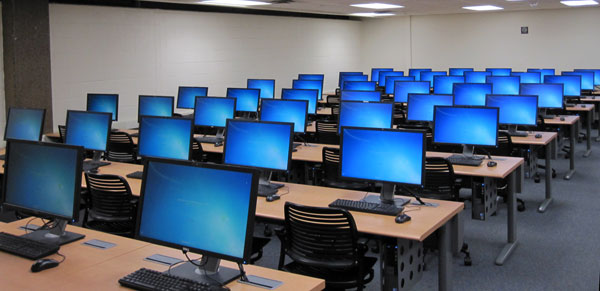
Source: https://www.monash.edu/venues/venues/computer-labs

With my background in computer science I do admire the shift towards the digital, and the appreciation of pure-software products, with the willingness to spend money on those. This is a really good trend from the sustainability perspective as well. But empty rooms are really no fun, and I keep buying my 10-year-old nice pillows, pictures and other decorations.

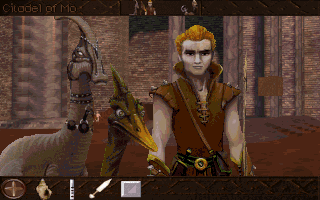
And now it’s time for me to share my business idea with you – up for grabs, first come first served! What if we could bring that digital things that miss the physical side to life through “physical twins”? Similar to Disney et al selling their soft toys looking like Mermaid or Nemo. But a twin for real, acting in real-time and real-life, along with its digital original. And it should not be so big of a step given the 3D-printing techniques, the cost of motors and modems, and the fact that the digital model has already been designed. Wouldn’t you love your favourite character from SIMS walk around in your house? Do you see the scale if we could right-click and order home physical twins of our favourite game characters? Personally, I would immediately invest in a couple of friendly dinosaurs from Lost Eden.
Internet of Empathy and Emotional Attachment


Some years ago my parents got themselves a robotic vacuum cleaner iRobot Roomba. They immediately gave it a name – Vasya. Sometimes Vasya would get stuck, and sometimes he would start sneezing out all the dust he had collected, and they thought it was cute and gladly told stories about Vasya. And studies show that when people turn in their broken robotic vacuum cleaners to a repair shop, the prefer not to have them replaced but rather repaired.

We do get emotionally attached to things. The day we decided to sell our motorcycle was a sad day because of that emotional attachment. All that feelings came up: the excitement of the first decision to buy, picking a model and a color, waiting for the delivery, seeing it for the first time, driving it for the first time. And the decision of selling if was simply because of that guilt that i don’t have enough time to drive it and it deserves a better owner. 

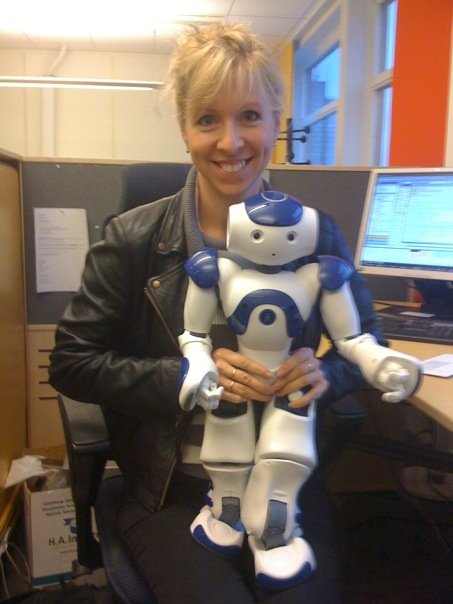
Attachment to intelligent things can be stronger. Our little Nao, for example. He came to us in 2009, worked and traveled with us, learned new things, and, last year, he actually moved out and now he lives with his new family in Gothenburg. And I must say that when I got to see a video of him traveling by train i get this warm feeling that everything is fine with him. 


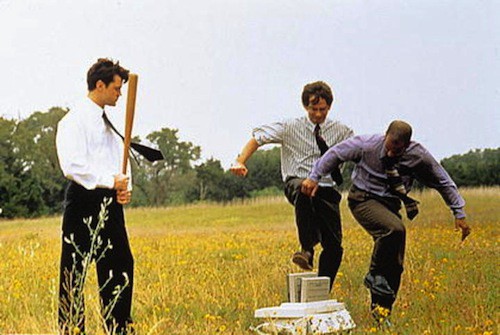
But what about things that don’t resemble a living creature? We used to kick our misbehaving printers, TV-sets (before the era of flat screens at least) and computers. At least i never got hard feelings when watching the “printer scene” from Office Space over and over again.


    We fell empathy and get emotionally attached to things for different reasons:

    1. Something resembles a living creature (works with toys as well)
    2. Something exhibits an intellect similar to a living creature (in this case the thing does not necessarily need to look like one).
    3. We have memories connected to the things (such as traveling together with your bike)

    A combination of these certainly makes the case stronger. Boston Dynamics, for example, build humanoids and animal-looking robots that not only move in a way living creatures do, but also act with an intellect, and a purpose, such as rescuing people from fire. People find the situation adorable and react as if these were living creatures interacting with each other (see youtube comments).


    p.p1 {margin: 0.0px 0.0px 0.0px 0.0px; font: 12.0px Helvetica; color: #454545} p.p2 {margin: 0.0px 0.0px 0.0px 0.0px; text-align: center; font: 12.0px Helvetica; color: #454545} p.p3 {margin: 0.0px 0.0px 0.0px 0.0px; font: 12.0px Helvetica; color: #454545; min-height: 14.0px}

    Would people ever like to hurt such intelligent creatures? What feelings do you get when watching the poor things getting abused? This is for sure a necessary evil, such as experiments on rats in medical tests. I have no idea how the coming generations will see such things. I can only hope that there is a shift into treating all things with respect, the similar way you treat a living creature. 


    I’m in Love with T-Shape of You

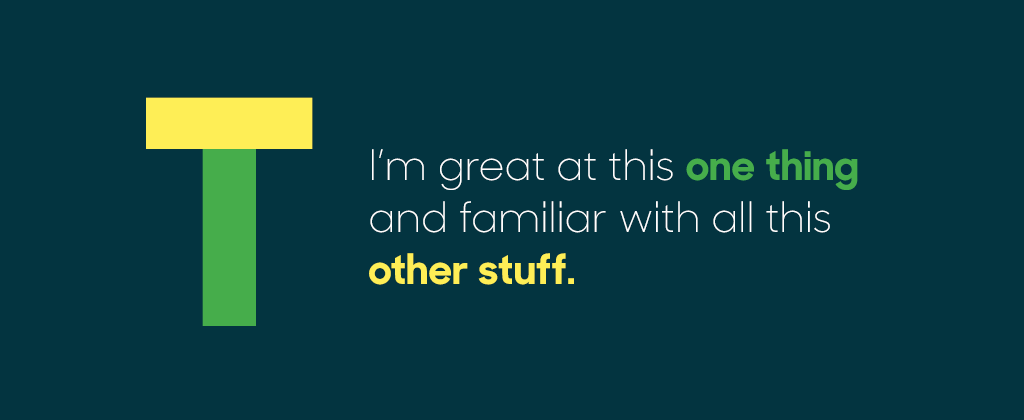
    Picture source: From T to Pi

    T-shaped person has in in-depth knowledge in one field (vertical bar of T) and a broad knowledge of an application domain (horizontal bar of T). For example, a statistician specialised in political systems. Or, a politician who knows statistics. It is important that the two bars are connected: if you are really good at solving differential equations and know a lot about french porcelain of 17th century you cannot automatically call yourself a T-shaped person. Similarly to T-shape, there is a Pi-shape with one more leg of in-depth knowledge, and an E-shape – you get the point. In general, the more “bars” you have as a person the more interesting you are. In case you choose to be I-shaped, you can still be endlessly interesting for people who are into the same field while running a risk of being seen as a geek by everyone else.

    Fun with Flags

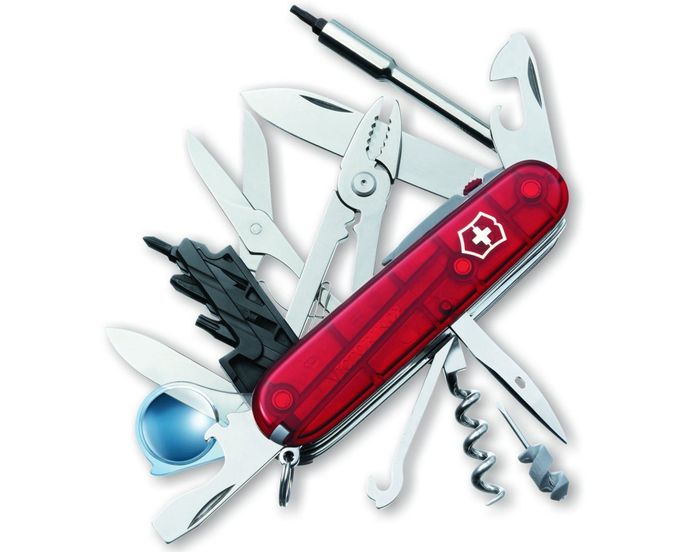
    Personally, I have been working hard on diversifying my professional profile (=adding more bars to my shape) while keeping it all connected. I gladly take opportunities of diving into new areas and shifting my focus from old areas. In the long run this strategy brings me to a shape of a Swiss army knife. There are plenty of “bars” of different shapes and directions, and they are all connected. 

    Companies love multipurpose tools – if they were to close down the corkscrewing department and put more focus on cutting department they would not need to go through a tedious process of firing and hiring people. But multipurpose aspects are not valued when it comes to bringing new people onboard because when a hiring manager is after skill A he’d often rather take a person who only has skill A than a person with skills A, B, C. The latter case is called “overqualified”, when in fact the hiring manager is simply worried that skill A won’t get enough focus. So here comes a free career advice: be clear (with yourself and others) of what skills you are good at and what skills give you most energy, and go for the ones you love. One of my personal favourites would be the corkscrew.

    My digital friends – the more the merrier?


    We have more and more supporters in life. Digital assistants pop up everywhere and now we have MikaSiriAlexaAmeliaLucidaCortana and many more on the market. They help us navigate in web shops, be more productive at work and keep track of our calendars. And as the field is becoming increasingly popular, the number of digital assistants continue to grow and often similar assistants are being created for the same purpose. And for some time I had this uneasy feeling of having too many of those around me, like having too many phones, or too many irons. Why can’t I have one ultimate assistant that can manage everything that concerns me, I thought. But actually I do need several of those. Because I don’t want my personal shopper to give me advices in my career. I would like my lifestyle coach to be a woman, and my personal trainer to be a man, preferably with Russian accent. And for driving instructions I for sure want Ozzy Osborne. Sometimes I want to be treated gently, and sometimes I want to be challenged. And I don’t want to tell them which approach to use on me – they should know it by themselves. And as I am not a talkative person I do not really want to talk to them. They should act on my behalf, schedule meetings, book tables at restaurants, order food for me, plan my routs and give me recommendations. I will require transparency and sometimes I will check how they came to their conclusions. I will do it more often with my new assistants and give my old proven ones more freedom – just like I do with my colleagues at work.

    But humans are full of conflicting objectives. My personal banking assistant may not be happy about the decisions of my holiday planner. And will my work assistant be able to agree with Paul’s work assistant to satisfy the constraints of our kids’ activity planner? This works as long as they all rely on the same multi-parametric system with all the knowledge that’s relevant to me. In other words, all my assistants are in fact one, with many different faces, voices and flavours. And we should not be afraid of hooking in more of them, as long as they are in agreement, and optimizing your life in a systemic way without leading you into local optimum.

    Let’s repeat the phrases we must forget

    Here’s a list of annoying phrases published by Betty Lui – I love it. I do get annoyed by 70% of those. And I do use about 20% of those myself (to be honest). I want to tell you some other annoying phrases that i often hear.


    We were too early

    Sure, it must feel comforting to say this. We failed because we were too smart for the rest of the world. The market was not ready. The supporting technologies were not ready. I suggest different phrasing:

    • We did design mistakes
    • Lack of supporting technologies made our product useless
    • We were not persistent
    • We did not dare to take it the whole way

    I am not shooting down the innovations there but sometimes we need to be more humble about the reasons our great ideas fail.

    How much do you think Elin learned about Communicating Embedded Systems after reading this book?
    We were probably slightly too early…

    It’s a good start

    Yes, i have a tendency of scanning for a negative hidden message in everything. And this one does sound negative to me when it’s given.  Don’t wrap negative messages into something that sounds more positive – put it like this instead:

    • You have not reached that far
    • This is junk
    But maybe it’s too much to ask from Swedes and Americans. Negative feedback is not a strong side of these nationalities in general.
    Source of the pictures: What does “It’s a good start” actually mean

    See it as a good experience

    Sure, experiences are good in general. And when we have to go through something that hurts/annoys/irritates we learn something and come out stronger. But i don’t ever want to hear this phrase from those who actually cause this experience, especially when the outcome it known a-priori.

    Source: http://www.lovethispic.com/image/95103/what-doesn%27t-kill-you-makes-you-stronger

    Spaghetti of Things

    Spaghetti software was a popular term in the 90s, when I just started to learn programming. When a tool is given to someone who does not plan for dimensioning, scalability and extensibility, the end result becomes a spaghetti. And I did create a couple of spaghetti-projects myself, with all my love to quick-fixes and limited time to hand in assignments at university. Spaghetti code requires shorter starting curve but is not future proof. 
    Similarly, “spaghetti” can easily be created when Internet of Things solutions are put together. A couple of years ago my team at Ericsson Research has created a prototype of a fully automated logistics system that consisted of some 100 sensors and actuators and used a control algorithm that could deal with any number of resources (vehicles, cranes, cargo) and adjusted to new logistics tasks and resource changes in real-time. No spaghetti code here. And a very beautiful demo that we presented at Mobile World Congress’2015. Underneath, however, was a “spaghetti” of cables, simply because not all of our devices were capable of wireless connectivity at that time.
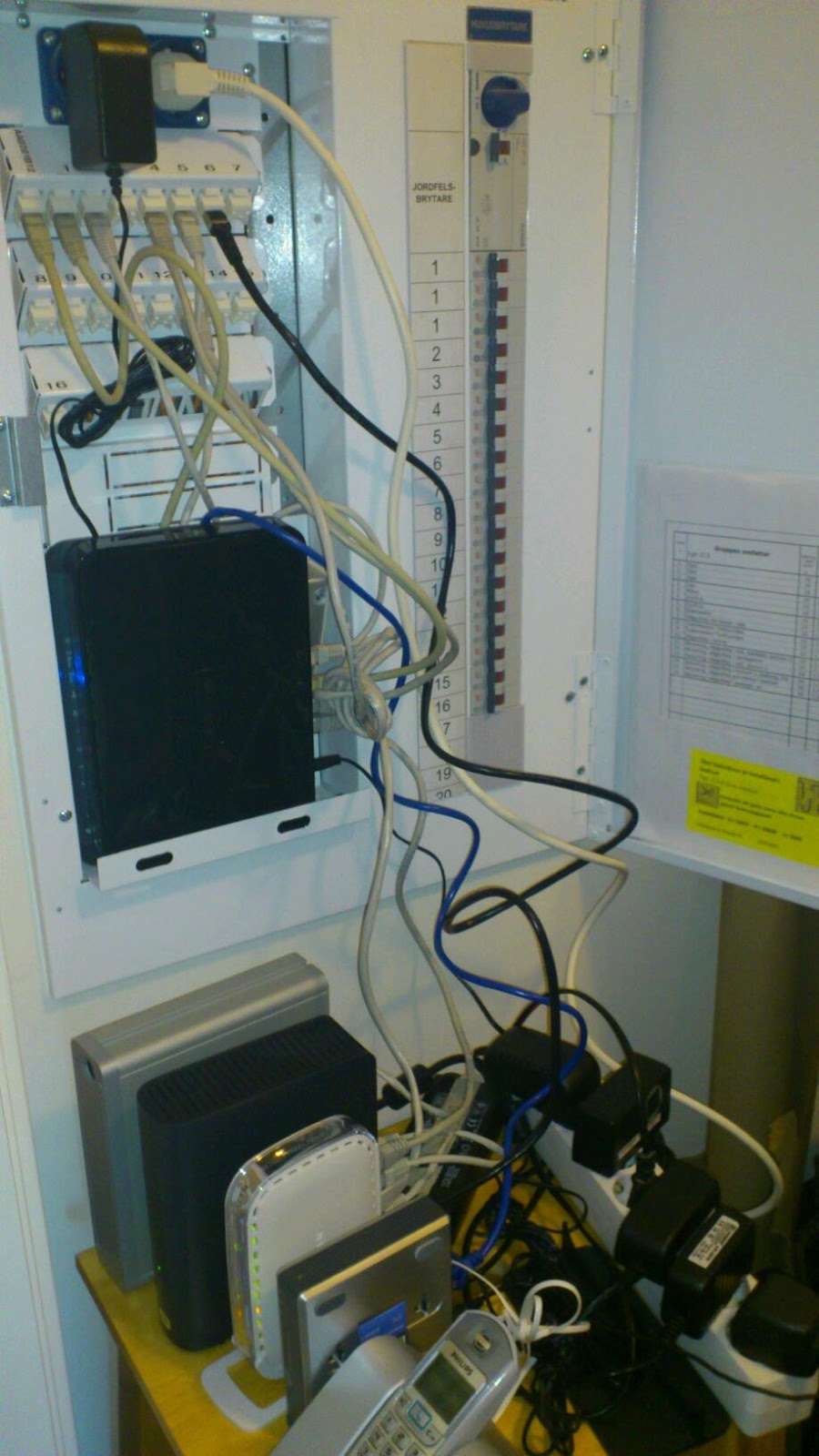
    Another example could be found at our place 5 years ago. I called it “brain of our apartment”. A couple of net disks, wireless router, and even a stationary phone(!). Now we don’t have cables any more, all is wireless and in the cloud, and still, there is a risk of creating virtual spaghetti. Ordinary users of a home kits such as Apple’s or Telldus‘ can now easily automate their homes without any knowledge of the underlying technologies as all the complexity is hidden. The invisible cables will however connect our fridges, tv-boxes, coffee machines and temperature sensors to different servers and when you ask your TV to check how your cigars are doing, your AppleTV will send a request to an iCloud server somewhere in the world to decode what you actually meant by this phrase, get back your request in a machine-readable form, send it to your Apple HomeKit, further to the HomeKit application server, back home, then to Telldus server somewhere in the world, back home to the cigar humidor where the humidity sensor is placed, and all the way back to your TV to deliver the answer to your question. No wonder that responses can take time. And the loger the chain of events the longer the response times. Instead, the involved cloud services could talk between themselves and deliver back an answer, and hopefully they can find a “close” friend to discuss.

    Commodities in Our Life

    We are constantly looking for new values that can be created out of old technologies that become more mature and scalable. Processors are powerful enough to give us search results in seconds, telecom networks become fast enough to transmit huge amounts of information almost instantly, small connected devices are deployed in everything, we expect mobile internet to work everywhere, and we expect all this to be for free, or almost for free. What we gladly pay for is the “Jet Black” shade of the phone, fancy filters in the camera application and Siri with a sense of humor. And we can easily forgive these value-adding services when they misbehave – it’s not a big deal if Siri does not get what you want from her. But when we lose coverage it becomes very annoying. Or if your device suddenly freezes and restarts, especially when you are right in the middle of credit card payment process. Can I trust that my microphone is actually muted after I clicked on mute? Can I trust that my information will stay secure?

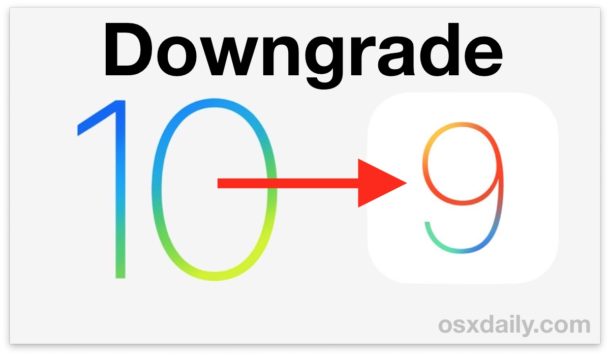
    Apple iOS 10 is Apple’s high score in the number of bugs. And here we’re talking about bugs in that basic functionality, such as battery life or sound, that we do not want to pay any extra for. They have already released several updates to it, still failing to fix the sounds problem on iPhone 6S. Isn’t is unacceptable for a phone that costs $600?  There are tons of information on the web about fixes and workarounds for the bugs in iOS 10, and even detailed instructions on how to revert to iOS 9. Some people even turn it to something positive: “Apple are so quick with their bug fixes and updates!” But isn’t it exactly what we paid Apple for from the very beginning – things just worked. 
    If my device tells me that the sound is on when in fact there is no sound, can I trust it’s muted microphone to actually be muted? Does the fancy outfit matter when you stop trusting someone?

    Saying no to IoT

    I did not think I would ever do it – refuse some new sensors around me. Generally I’m all for that, and I will gladly augment my body with IoT devices when the technology is mature enough. And now this offer from Stockholm university arrives: my little boy has been selected to participate in a research study that tracks brain wave patterns through an electroencephalogram. Check it out:

    Most probably the researcher who composed the letter does not have own kids. Because to me this picture looks as if it has been taken directly from a horror movie, and I would never let my little Paul participate in such an experiment, even if I know that the small metal discs with electrodes placed on the scalp only read and send the signals. This is still too much for a mother. This is how my heart reacts – we are programmed to defend our kids in every situation. And of course I see the value of such experiments and that researchers in linguistics do need a representative population of small kids to make experiments on. But then at least ask a marketing person to present it to parents in a selling way, especially when using Stockholm University branding. 

    Slow Science

    Did it ever happen to you that you cannot see the forest for the trees? I could see it so clearly right after vacation. And this time of year we are busy finalizing the targets for this year and at the same time setting the strategy for the next year. And technological progress is constantly accelerating, researchers are supposed to deliver new results in a high pace, publish more papers, submit more project applications and produce more PhD students. 
    Quality of research education can be assessed with respect to different expected outcomes of it – the quality of the produced PhD thesis, the quality of the main product of PhD education, i.e. the independent researcher, and the ability of this independent researcher to drive science and well-being forward by collaboration and innovation. Studies [123] state that several factors impact PhD thesis quality in a negative way. Governments require universities to increase the quantity (in terms of completed PhDs and articles), which results in situations when persons not suitable for PhD education are being recruited. In combination with difficulty of termination of PhD thesis work it results in situation when supervisor puts major effort in the student’s PhD thesis just to get it done.  Additionally, with increased number of students per supervisor and a time limit for producing a PhD thesis, there is a decrease of thesis quality. In other words, when academic research tries to move with a pace of technological progress, there is a negative effect on the quality. 
    What about decreasing the pace and letting scientific results emerge at their own pace? Slowness has got a lot of attention recently. Slow cooking, Slow gardeningSlow readingSlow educationSlow parentingSlow designSlow cinema, and Slow photography are examles of so-called Slow Movement that has been coined as opposed to increasing speed of technological progress. And the concept of Slow science is based on the belief that science should be a slow, steady, methodical process, and that scientists should not be expected to provide quick fixes to society’s problems. Slow science supports curiosity-driven scientific research and opposes performance targets [4].
    And even though I can see values in Slowness, it is not my thing. I have never liked longer hikes, meditation and power walks. Long-distance running is OK only within a race, and long-distance xc-skiing is OK only in a hilly terrain. But in some cases one needs to go slow and I was lucky that 18 years ago my PhD supervisor did not let me have these quick ego-kicks that i was craving. We had to give it time, let the work mature and only publish it in the best forums. Sometimes we need time to find the right thing, and sometimes there’s love at the first sight and no time to lose. 


    Facebook Inc., how could you…

    Hello, it’s been a while since I wrote something here. Vacation, and not like my thoughts ever stopped spinning but I just could not get them out in written form. Now I’m back home where me and my laptop can get some private time.

    So Instagram (Facebook Inc.) comes out with this new feature of photos/videos that disappear within 24 hours. As in Snapchat, that is. Paul’s immediate reaction: why would I ever want to post something that disappears? This is a natural reaction of a perfectionist. Every photo or video that he produces is a small piece of art which only ends up on social media if Paul thinks it’s beautiful or at least interesting enough. Why would he want it to be erased. I am not a perfectionist. I love quick and dirty, good enough and low-hanging fruits. And my purpose of posting something on social media is to share an immediate thought or sight. It is some kind of therapy of putting it down and sharing, like in this blog. And as I do it in quick and dirty manner my posts do not necessarily end up future-proof.

    In other words, I do see value in disappearing media, as many others on Snapchat. And naturally Instagram needed to fill the gap and implemented it. The small feature is just a piece of software and cannot be protected by patents. Still, lots of debates took place. “How could they just copy something that Snapchat has been developing for so long!”, they said in Swedish media. No, I do not think they have been developing it for so long. I do not think they’ve been brainstorming for months to come up with the feature. Somebody just came up with it, built a community and got the feature copied into another community – it’s evolution.